
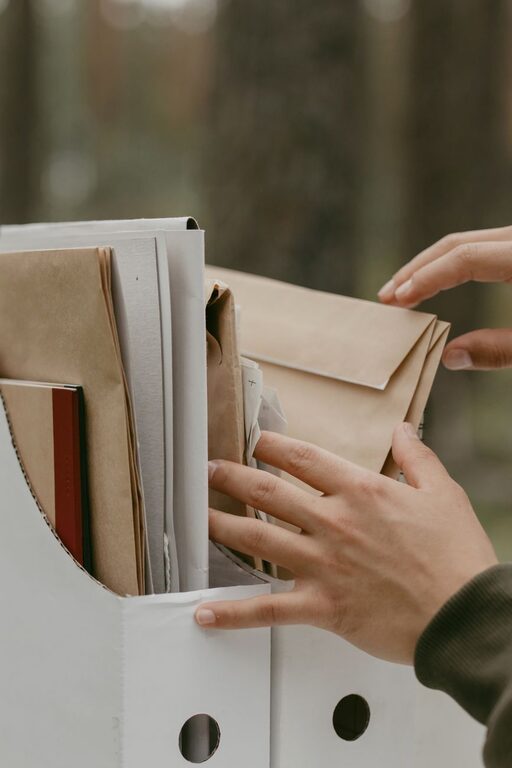
Paper clutter can build up quickly. Mail, receipts, school papers, instruction manuals, coupons, and notes often collect on counters and tables before you realize it. The good news is that you do not need a complicated system to regain control.
A few simple habits can reduce the amount of paper entering your home and make the papers you keep easier to manage. Start small, work in short sessions, and create a clear place for every type of document.
Begin With a Quick Paper Sweep
Before creating a filing system, gather the loose paper from around your home. Check kitchen counters, desks, entryway tables, drawers, bags, and the family car.
Place everything in one central location, such as a box or a clear area on a table. This gives you a better picture of what you have and prevents the same papers from being sorted several times.
Do not try to organize every item immediately. First, separate the pile into broad groups:
– Action needed
– Keep for reference
– Store long term
– Recycle or discard
– Belongs to someone else
A quick first pass makes the task feel more manageable. If you find papers that need more research, place them in a temporary review pile and continue sorting.
Use the Four-Question Test
When deciding whether to keep a piece of paper, ask four simple questions:
- Do I need to take action?
- Will I need this information later?
- Is this the only copy?
- Can I easily find the information online?
If the answer to the first question is yes, move the paper to an action folder. If you can access the information online or replace the document easily, you may not need to keep the paper copy.
You can also ask whether the document is useful because of its information or because of its sentimental value. Useful documents should be organized for quick access. Sentimental papers can be stored separately so they do not mix with everyday paperwork.
Create a Small Action Station
Papers that require a response often create the most visible clutter. Set up one clearly labeled folder, tray, or box for these items.
Use it for papers such as:
– Forms that need to be completed
– Bills or notices that need attention
– Invitations
– Items to discuss with a family member
– Documents that need to be filed elsewhere
Review the action station once or twice a week. Choose a regular time, such as Saturday morning or the first day of the week. A short review prevents papers from disappearing under newer mail.
Avoid creating several action piles in different rooms. One central location is easier to remember and maintain.
Make a Simple Filing System
A filing system does not need to include dozens of categories. Too many folders can make filing feel like a chore. Start with a few broad labels that match your household’s needs.
Useful categories may include:
– Home
– Transportation
– School
– Work
– Insurance
– Taxes
– Warranties
– Personal records
Use folders that are easy to label and open. You can organize papers alphabetically, by household member, or by how often you use them. Choose the method that feels most natural.
For documents you use often, keep the files within easy reach. Less frequently used records can go in a labeled file box or storage cabinet.
Keep Important Papers Separate
Some documents deserve extra protection and should not be mixed with everyday receipts or flyers. Create a separate location for important records, such as a small file box, locked drawer, or document organizer.
Label the location clearly and let household members know where it is. You may also want to keep a brief list of what is stored there. This makes it easier to find a document when you need it.
Scan Useful Documents
Digital copies can reduce the number of papers you need to store. A phone scanning app or home scanner can turn documents into clear digital files.
Before scanning, make sure the image is readable and includes all pages. Name each file in a consistent way, such as:
– 2026 Home Warranty Kitchen Appliance
– 2026 School Registration Child Name
– 2026 Vehicle Service Receipt
Store files in clearly labeled folders on your computer or preferred cloud service. Use a backup method so that important digital copies are not stored in only one place.
Scanning is especially helpful for reference documents, receipts, manuals, and records that you may need occasionally. It may not be appropriate for every document, so check whether an original is required before discarding it.
Reduce Incoming Paper
The easiest paper to manage is the paper that never enters your home. Look for ways to reduce mail and printed materials.
Try these steps:
– Cancel catalogs you no longer read.
– Choose digital statements when that option suits you.
– Unsubscribe from unwanted newsletters and promotional mail.
– Ask organizations to remove outdated names from mailing lists.
– Avoid taking printed receipts when a digital receipt is available.
– Request electronic copies of manuals and guides.
– Place a recycling bin near the entryway for unwanted mail.
Open mail near the recycling bin so envelopes and inserts can be discarded immediately. Remove junk mail before it reaches a desk or countertop.
Deal With Receipts and Manuals
Receipts often become a large source of paper clutter. Decide where they will go as soon as you bring them home. You might use a small envelope, a folder, or a digital receipt app.
Review receipts regularly and discard those you no longer need. For purchases with warranties or return periods, keep the receipt with the related product information until it is no longer useful.
Instruction manuals can also take up valuable space. Check whether a digital copy is available before storing the original. If you keep a manual, place it in a folder labeled “Manuals” rather than creating a separate pile for each item.
Create a Memory Box
Children’s artwork, handwritten notes, cards, and other keepsakes can be difficult to sort because they have emotional value. A memory box gives these papers a defined home.
Set a size limit for each family member or category. When the box is full, review the contents and choose the items that matter most. You can photograph especially large artwork before recycling it.
This approach preserves meaningful memories without allowing sentimental papers to spread throughout the house.
Schedule a Regular Paper Reset
Paper clutter returns when there is no routine for handling it. Set aside 10 to 15 minutes each week to:
– Empty the mail area
– Review the action folder
– File completed documents
– Scan papers that need digital storage
– Recycle items that are no longer useful
– Clear desks and counters
A short weekly reset is usually easier than waiting until several months of paper have accumulated. Keep a shredder or recycling bin nearby to make the process convenient.
Keep the System Easy to Maintain
The best paper organization system is one you can use without much effort. Avoid buying storage products until you understand what you need. Start with basic folders, labels, and one central collection spot.
Explain the system to everyone who handles household mail or paperwork. If a folder is difficult to access or the labels are unclear, adjust the setup.
Paper clutter does not need to be solved all at once. By reducing incoming paper, sorting regularly, scanning useful documents, and giving important papers a clear home, you can create a calmer and more functional household.